Personal Loans: Everything You Need to Know
Personal loans can provide access to funds for
debt consolidation, home improvements, unexpected
expenses, and other permitted purposes. But before
borrowing, it is important to understand interest
rates, fees, eligibility requirements, and the
long-term cost of repayment.
This comprehensive guide from
LoanBari
explains how personal loans work, the different
types available, how lenders assess applications,
and how to compare borrowing options.
Important: This guide primarily
discusses lending practices in the United States.
Loan products, laws, and eligibility requirements
differ by country and lender. LoanBari provides
educational information, not guaranteed loan offers.
and repayment responsibilities.
What Are Personal Loans?
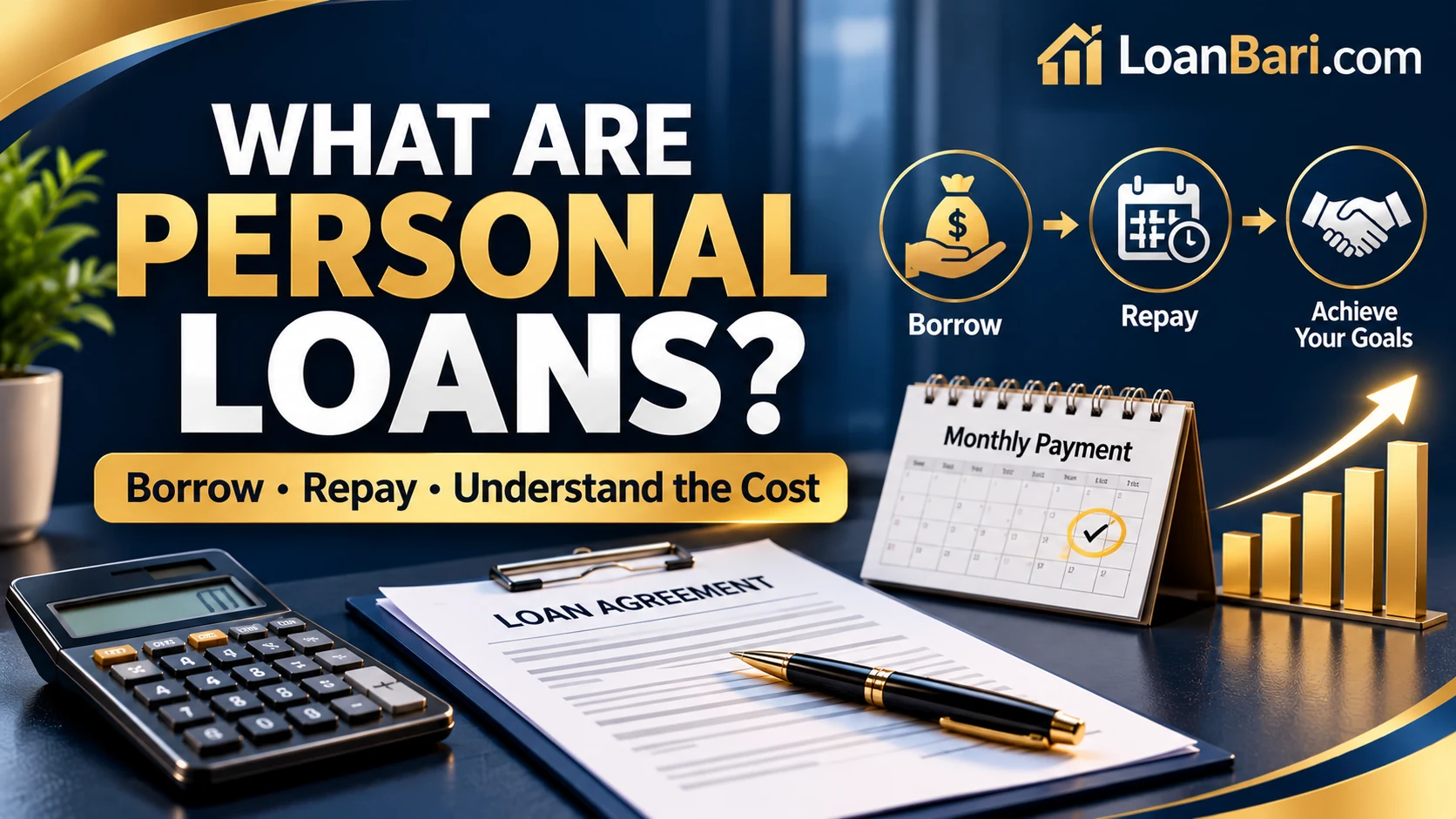
A personal loan is a financing arrangement that
allows a borrower to receive money from a lender
and repay it according to agreed terms. Many
personal loans are installment loans, meaning
the borrower receives a lump sum and makes
regular payments over a defined period.
Personal loans may be offered by banks, credit
unions, and online lenders. The available loan
amount, interest rate, fees, and repayment term
depend on the lender and the applicant’s
financial circumstances.
Key Features of Personal Loans
- Funds are borrowed under a loan agreement.
- Interest is usually charged on the balance.
- Repayment follows an agreed schedule.
- Additional fees may apply.
- Some loans require collateral.
- Approval depends on lender requirements.
and repaying it under agreed terms.
How Do Personal Loans Work?
Personal loans generally begin with an application.
The lender evaluates the applicant’s information,
determines whether financing can be offered,
and provides proposed terms if the application
meets its requirements.
After accepting an approved offer, the borrower
receives funds according to the lender’s process.
Payments are then made over the agreed term.
The Typical Borrowing Process
- Determine how much you need to borrow.
- Review your income, expenses, and debts.
- Research lenders and borrowing options.
- Compare interest rates, APRs, and fees.
- Submit an application.
- Complete any required verification.
- Review and accept the loan agreement.
- Repay the loan according to its terms.
For a closer look at each stage, read our
guide to how personal loans work
.
Types of Personal Loans
Personal loans are not all structured in the same
way. Understanding the main differences can help
borrowers identify suitable options.
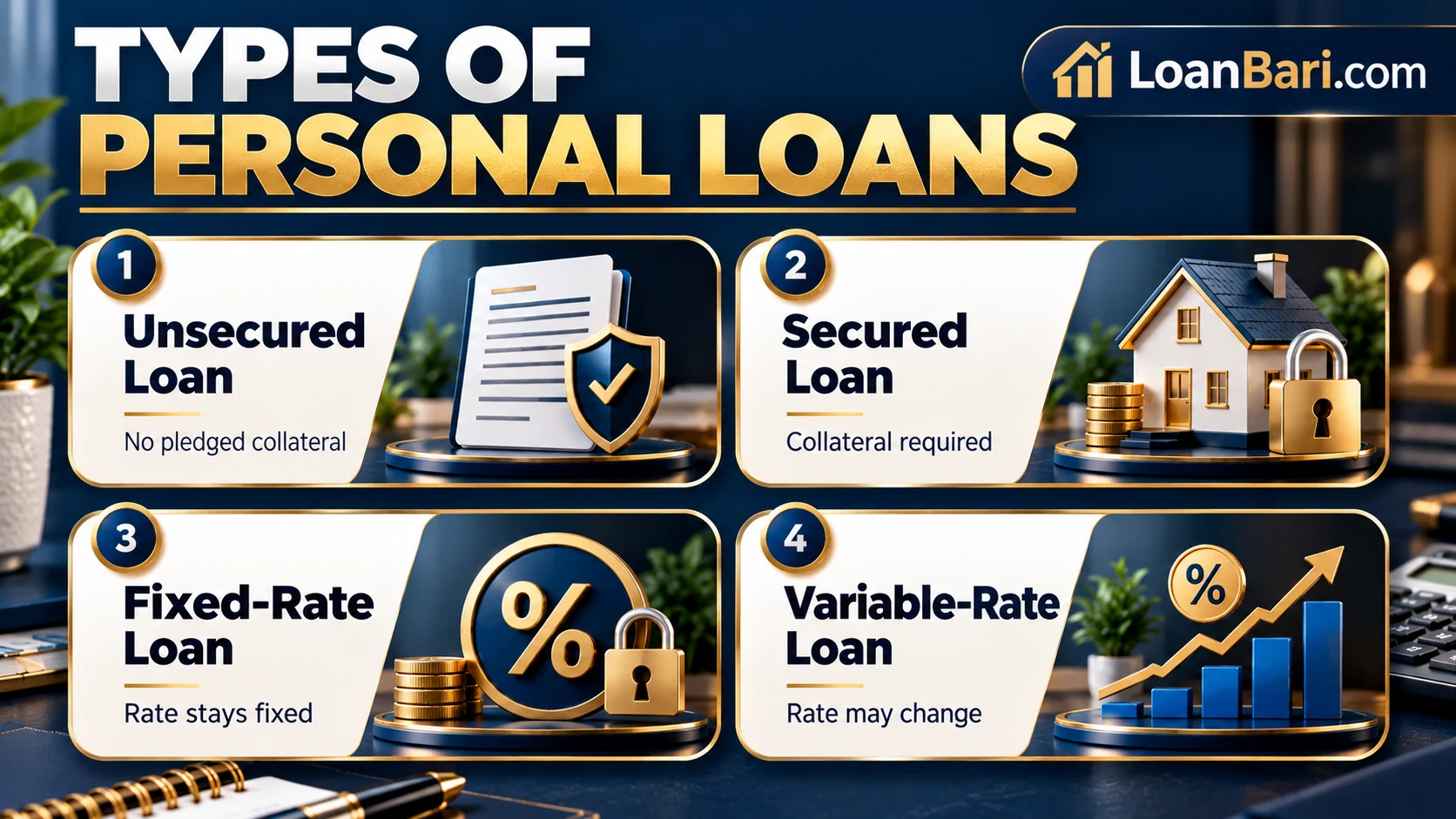
Unsecured Personal Loans
An unsecured personal loan does not require
a specific asset to be pledged as collateral.
The lender assesses the applicant’s credit
profile, repayment capacity, and other factors.
Secured Personal Loans
A secured personal loan requires collateral.
The pledged asset may be at risk if the borrower
fails to meet repayment obligations.
Fixed-Rate Personal Loans
Fixed-rate personal loans maintain the same
contractual interest rate throughout the term.
Standard fully amortizing fixed-rate loans
generally have predictable scheduled payments.
Variable-Rate Personal Loans
Variable-rate personal loans have interest rates
that can change under the agreement. Borrowers
should understand how changes could affect
payment amounts and total borrowing costs.
Explore the differences in our
secured vs unsecured personal loans
comparison guide.
different costs, terms, and risks.
What Can Personal Loans Be Used For?
Borrowers use personal loans for a variety of
expenses. However, permitted uses vary by lender.
- Consolidating eligible debts
- Home improvement projects
- Unexpected household expenses
- Eligible medical expenses
- Moving and relocation expenses
- Major purchases
- Other lender-approved personal expenses
Debt Consolidation
Debt consolidation involves combining eligible
debts into a new borrowing arrangement. It may
simplify payments, but it does not automatically
reduce total costs.
Compare the new APR, fees, repayment term,
and total repayment amount against your
existing obligations.
Home Improvements
Some borrowers use personal loans for repairs
or renovations. Unlike certain home-equity
financing products, unsecured personal loans
generally do not require a home as collateral.
Borrowers should confirm that the intended
purpose is permitted by the lender.
Personal Loan Interest Rates and APR
The interest rate affects how much interest
is charged on a loan. APR, or annual percentage
rate, is an annualized measure of credit cost
that may incorporate certain additional
finance charges.
Two loans with similar advertised interest
rates can have different APRs when their
applicable charges differ.
What Affects Personal Loan Rates?
- Credit history and creditworthiness
- Income and existing financial obligations
- Loan amount
- Repayment term
- Collateral requirements
- Lender underwriting policies
- Market conditions
Our detailed article about
personal loan interest rates
explains how borrowing costs are determined
and what borrowers should compare.
Interest Rate vs APR
The interest rate is one component of borrowing
cost. APR provides a broader annualized measure
under applicable disclosure rules.
When reviewing offers, compare APRs alongside
loan terms, monthly payments, and the total
amount expected to be repaid.
Personal Loan Fees and Additional Charges
Fees can significantly affect the cost of
borrowing. Not every lender charges the
same fees, so reviewing disclosures is essential.
Origination Fees
An origination fee may be charged for arranging
or processing a loan. Depending on the agreement,
it may reduce the amount of funds received.
Late Payment Fees
Late payment fees may apply when payments
are not made according to the agreement
and applicable law.
Prepayment Penalties
Some agreements may include charges for
paying off a loan early. Check the terms
before making additional payments.
Other Possible Costs
Additional charges may depend on the lender
and loan product. Borrowers should request
and review the complete fee information.
Learn more about
personal loan origination fees
and how they can affect the amount received
and the overall cost of a loan.
Personal Loan Requirements
Eligibility requirements differ among lenders.
Many evaluate a combination of identity,
income, credit information, and repayment capacity.
Common Eligibility Factors
- Legal eligibility to enter a loan agreement
- Identity verification
- Applicable residency requirements
- Income or other acceptable financial resources
- Existing debt obligations
- Credit history, where applicable
- Additional lender-specific criteria
Documents You May Need
- Government-issued identification
- Recent pay statements or income records
- Bank statements, if requested
- Proof of address
- Other supporting documentation
For a more detailed checklist, see our
personal loan requirements
guide.
Meeting a lender’s basic requirements does
not guarantee loan approval.
What Credit Score Do You Need for a Personal Loan?
There is no universal minimum credit score
that applies to every personal loan.
Lenders use different eligibility standards,
and some consider additional information
beyond a credit score.
In the United States, lenders may review
credit reports, credit scores, income,
and debt obligations when assessing
applications.
How Credit History Can Affect Borrowing
Applicants with stronger credit profiles
may qualify for more favorable terms.
Applicants with weaker or limited credit
histories may have fewer options or
higher borrowing costs.
Ways to Prepare Before Applying
- Review your credit reports for errors.
- Pay existing bills on time.
- Understand your debt obligations.
- Evaluate your monthly repayment capacity.
- Compare suitable lender requirements.
Read our article about the
credit score for a personal loan
to understand common lender considerations.
U.S. consumers can find information about
accessing credit reports at
Personal Loan Calculator: Estimate Monthly Payments
A personal loan calculator can help estimate
monthly payments, total interest, and
repayment costs before borrowing.
Use the
personal loan calculator
to explore how loan amounts, interest rates,
and repayment periods affect payments.
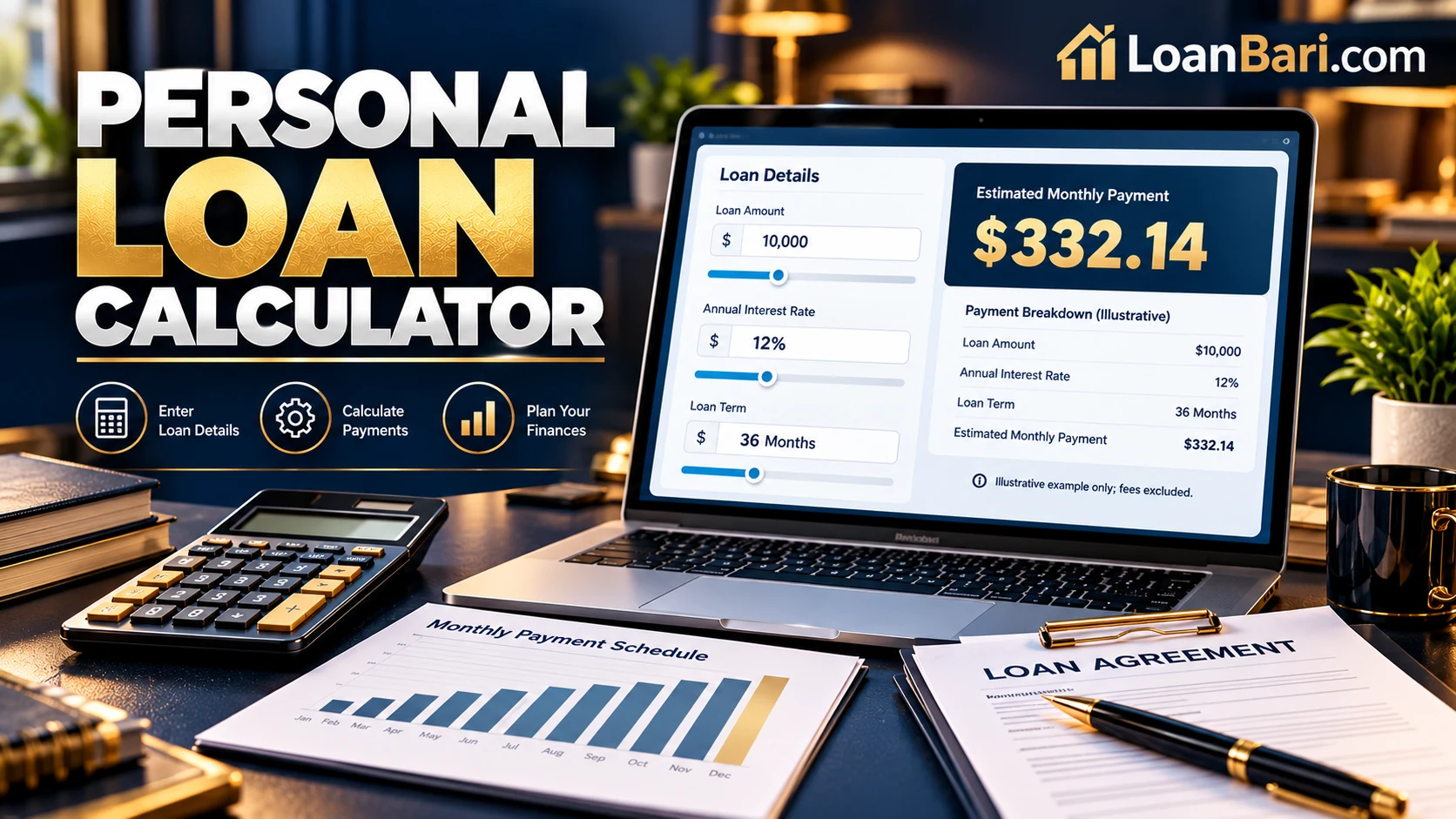
choosing a repayment term.
Monthly Payment Formula
For a standard fixed-rate, fully amortizing
loan with monthly payments:
Monthly Payment = P × r × (1 + r)^n
÷ ((1 + r)^n − 1)
- P = Principal amount
- r = Monthly interest rate
- n = Total number of monthly payments
For a zero-interest loan, the monthly principal
payment is simply the loan amount divided by
the number of payments, excluding any fees.
Personal Loan Calculation Example
| Loan Detail | Example |
|---|---|
| Loan Amount | $10,000 |
| Annual Interest Rate | 12% |
| Loan Term | 36 months |
| Estimated Monthly Payment | $332.14 |
| Estimated Total Payments | $11,957.15 |
| Estimated Total Interest | $1,957.15 |
This hypothetical example assumes a fixed
annual interest rate, regular monthly payments,
and no additional fees. The stated interest
rate is not necessarily the APR. Actual lender
calculations may differ.
How to Apply for a Personal Loan
Applying for a personal loan involves several
important decisions. Preparing before submitting
an application may help borrowers understand
their options and avoid unnecessary costs.
Step 1: Determine Your Loan Amount
Identify the expense you need to cover.
Avoid borrowing more than you can reasonably
afford to repay.
Step 2: Review Your Budget
Consider income, essential expenses,
existing debts, and emergency savings.
Step 3: Research Lenders
Compare reputable banks, credit unions,
and online lenders serving your location.
Step 4: Check Prequalification
Some lenders offer preliminary eligibility
checks. Confirm whether the process involves
a soft or hard credit inquiry.
Step 5: Submit Your Application
Provide accurate information and complete
any required identity or income verification.
Step 6: Review the Agreement
Carefully review the APR, repayment term,
payment schedule, fees, and consequences
of missed payments.
Follow our detailed guide on
how to apply for a personal loan
for a step-by-step application checklist.
How to Compare Personal Loans
Comparing personal loans involves more than
choosing the lowest advertised interest rate.
Borrowers should consider the complete
repayment obligation.
Important Comparison Factors
| Factor | What to Check |
|---|---|
| APR | Annualized borrowing cost |
| Monthly Payment | Affordability within your budget |
| Loan Term | Number of scheduled payments |
| Origination Fees | Applicable upfront costs |
| Total Repayment | Expected total borrowing cost |
| Prepayment Terms | Early repayment conditions |
| Collateral | Whether an asset is pledged |
For a practical comparison checklist,
read our guide on
how to compare personal loans
.
When possible, compare offers for the same
borrowing amount and similar repayment periods.
Personal Loan Repayment and Early Payoff
Many installment personal loans require
scheduled monthly payments. Payments
generally include principal and interest.
Tips for Managing Repayment
- Include payments in your monthly budget.
- Set reminders for due dates.
- Monitor loan statements.
- Keep records of payments.
- Contact the lender if financial difficulties arise.
- Understand how additional payments are applied.
Can You Pay Off a Personal Loan Early?
Many lenders allow early repayment.
Paying down principal faster may reduce
interest costs, depending on the loan
structure and applicable fees.
Learn more about how to
pay off a personal loan early
and what to check before making extra payments.
Advantages and Disadvantages of Personal Loans
Potential Advantages
- Access to funds for permitted expenses
- Predictable payments on many fixed-rate loans
- Defined repayment schedules
- Unsecured borrowing options
- Potential debt consolidation opportunities
Potential Disadvantages
- Interest increases the cost of borrowing.
- Origination and other fees may apply.
- Missed payments may affect credit.
- Approval is not guaranteed.
- Some offers may be expensive.
- Secured loans can put collateral at risk.
The suitability of a personal loan depends
on the borrower’s financial circumstances
and available alternatives.
Alternatives to Personal Loans
A personal loan is not always the most
appropriate financing option. Consider
alternatives before taking on debt.
- Using available savings
- Postponing a nonessential purchase
- Negotiating payment arrangements
- Reviewing suitable credit union products
- Considering lower-cost financing options
- Seeking nonprofit credit counseling
Each option may have different costs,
eligibility requirements, and risks.
How to Avoid Personal Loan Scams
Loan scams can involve false approval
promises, impersonation, and requests
for sensitive financial information.
Common Warning Signs
- Guaranteed approval without meaningful checks
- Requests for payment through gift cards
- Pressure to send money immediately
- Unverifiable company contact information
- Requests for online banking passwords
- Misleading government affiliation claims
Verify the lender’s identity and applicable
authorization before providing personal
or financial information.
U.S. consumers can find additional information
from the
Federal Trade Commission
and the
Consumer Financial Protection Bureau
.
Frequently Asked Questions About Personal Loans
1. What is a personal loan?
A personal loan is money borrowed under
an agreement requiring repayment, usually
with interest and potentially fees.
2. Are personal loans secured or unsecured?
Both types exist. Secured loans require
collateral, while unsecured loans do not
require a specific pledged asset.
3. Can I get a personal loan with bad credit?
Some lenders consider applicants with weaker
credit profiles. Approval and terms depend
on lender requirements.
4. What credit score is required?
There is no universal minimum credit score.
Requirements differ by lender and product.
5. How much can I borrow?
Available amounts depend on the lender,
the applicant’s financial circumstances,
and applicable lending requirements.
6. Do personal loans affect credit scores?
They can. Applications, payment history,
and changes to credit accounts may
affect credit scores.
7. What is the difference between APR and interest rate?
The interest rate describes interest charges.
APR is an annualized measure that can
incorporate certain additional finance charges.
8. Can I repay a personal loan early?
Many lenders allow early repayment.
Review the agreement for any applicable
charges or restrictions.
9. How long does loan approval take?
Processing times vary by lender,
application completeness, and
verification requirements.
10. Does prequalification guarantee approval?
No. Prequalification is preliminary
and does not guarantee final approval.
11. What happens if I miss a payment?
Depending on the agreement and applicable
law, consequences may include fees,
credit reporting, or collection activity.
12. Is a personal loan better than a credit card?
The better option depends on APR,
fees, repayment structure, and
the borrower’s needs.
13. Are personal loans available internationally?
Personal lending products exist in many
countries. Terms, regulations, and
consumer protections vary by jurisdiction.
14. Can personal loans be used for debt consolidation?
Some lenders permit debt consolidation.
Borrowers should compare the new loan’s
total cost against their existing debts.
Personal Loan Checklist Before Borrowing
- Confirm how much money you need.
- Evaluate your monthly budget.
- Compare suitable loan offers.
- Review APR and applicable fees.
- Check total repayment costs.
- Understand collateral requirements.
- Read late payment conditions.
- Review early repayment terms.
- Verify the lender’s identity.
- Keep copies of all disclosures.
Final Thoughts on Personal Loans
Personal loans can be useful when they
serve a clear purpose and the repayment
obligations are manageable.
Before borrowing, review interest rates,
APR, fees, repayment terms, and alternatives.
A careful comparison can help you make
a more informed financial decision.