Personal Loan Credit Score Requirements: What Score Do You Need?
Your credit score can play an important role when you apply for a personal loan. It may influence whether a lender approves your application, how much you can borrow, the interest rate you receive, and the repayment terms available to you. However, there is no single credit score that every lender requires.
Some lenders work with borrowers who have limited or less-than-perfect credit histories, while others prefer applicants with stronger credit profiles. A lender may also consider your income, existing debt, employment, requested loan amount, and ability to make payments.
Understanding personal loan credit score requirements before applying can help you prepare, compare offers more carefully, and avoid unnecessary applications. This guide explains common FICO® Score ranges, how lenders review credit reports, what may happen when your score is low, and practical steps you can take before submitting an application.
If you are new to borrowing, start with our complete personal loans guide to understand the basics of personal loans, common uses, costs, and repayment.
1. Is There a Minimum Credit Score for a Personal Loan?
There is no universal minimum credit score for a personal loan. Each lender establishes its own eligibility standards, and those standards may differ based on the loan product, loan amount, repayment period, and the applicant’s overall financial situation.
One lender may consider an applicant with a fair credit score, while another may require a stronger credit profile. Some lenders may review applications from people with limited credit histories, but approval can depend on additional factors such as income, debt obligations, and payment history.
It is also important to understand that a lender’s advertised minimum score, if one is published, does not guarantee approval. Meeting a stated score requirement does not automatically mean that you qualify for the loan or receive the advertised interest rate.
Why lenders review credit scores
A credit score is a numerical summary calculated from information in your credit report. It helps lenders estimate how you have managed credit obligations in the past. A stronger score may indicate a history of responsible credit use, although lenders generally review more than the score alone.
When evaluating a personal loan application, a lender may use your credit information to help assess:
- Credit history: Whether you have a record of managing credit accounts and making payments.
- Payment behavior: Whether your accounts show on-time payments, late payments, or other negative information.
- Outstanding debt: How much you currently owe on credit cards, loans, and other reported accounts.
- Recent credit activity: Whether you have recently applied for or opened several credit accounts.
- Overall credit risk: How your credit profile compares with the lender’s underwriting standards.
Your credit score is one part of the decision. Lenders may also verify your income, calculate your debt-to-income ratio, and review information supplied in your application.
Does a higher credit score improve your chances?
A higher credit score can make an application more attractive to some lenders. It may also help you qualify for more competitive interest rates or loan terms. However, the effect depends on the lender and the rest of your financial profile.
For example, an applicant with a strong score but substantial existing debt may not receive the same offer as another applicant with a similar score and lower monthly obligations. Likewise, a borrower with a shorter credit history may be assessed differently from someone with many years of established credit.
To understand the wider approval process, read our guide to how personal loans work.
2. FICO Credit Score Ranges Explained
FICO® Scores are commonly used in lending decisions, although lenders may use different versions of FICO, other scoring models, or additional information when reviewing an application. Many widely used FICO scoring models have a range of 300 to 850.
The following categories are commonly used to describe standard FICO score ranges. They help you understand where a score falls, but they are not personal loan approval rules.
| FICO Score Range | Common Category | General Description |
|---|---|---|
| 300–579 | Poor | Credit history may contain significant negative information or limited positive payment history. |
| 580–669 | Fair | Credit may be below the range many lenders consider strong. |
| 670–739 | Good | Generally viewed as a positive credit range. |
| 740–799 | Very Good | Indicates a stronger credit profile under common FICO categories. |
| 800–850 | Exceptional | Represents a very strong score under the standard FICO range. |
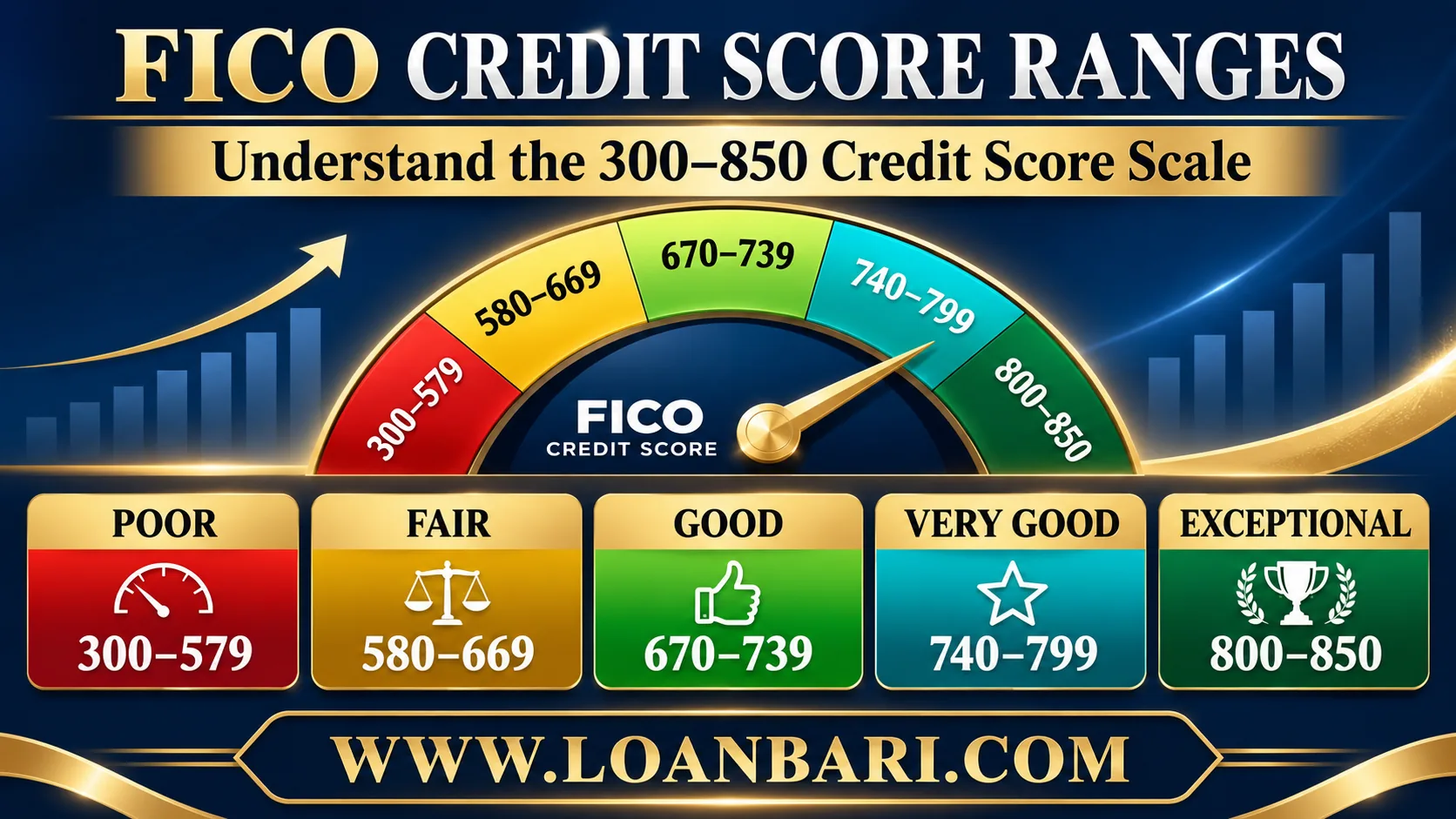
Remember: These categories describe common FICO score ranges. They do not mean that every lender will approve applicants in a particular range. A lender may use a different scoring model, a different version of a score, or additional underwriting requirements.
What does a poor credit score mean for a personal loan?
A score in the poor range may make it more difficult to qualify with lenders that prefer applicants with established, positive credit histories. If a lender is willing to consider the application, the available loan may have a higher interest rate, lower borrowing limit, additional conditions, or a shorter repayment period.
Before accepting an offer, compare the annual percentage rate (APR), fees, monthly payment, and total repayment amount. A loan that is available to you is not automatically an affordable loan.
Can a fair credit score qualify for a personal loan?
Some lenders may consider borrowers with fair credit, but their decisions depend on the full application. Income stability, current debt, recent payment history, and the requested loan amount may all matter.
If your score is in this range, it can be useful to check whether a lender offers a prequalification process that uses a soft credit inquiry. Read the lender’s terms carefully to understand whether prequalification affects your credit and whether a later formal application will involve a hard inquiry.
Is a good or very good score enough for approval?
A good or very good score may improve your options, but it does not guarantee approval. Lenders can decline an application for reasons unrelated to the score, such as insufficient income, high existing debt, unverifiable information, or failure to meet a specific eligibility requirement.
Applicants with stronger credit should still compare multiple loan offers and review the full cost of borrowing rather than choosing an offer based only on its advertised rate.
3. How Your Credit Score Affects a Personal Loan
Your credit score can influence several parts of a personal loan offer. The exact effect varies by lender, scoring model, loan product, and the details of your application.
Loan approval
Lenders use credit information to help assess the likelihood that a borrower will repay a loan as agreed. A stronger credit history may support an application, while missed payments, defaults, or other negative information may create concerns.
However, credit score is not the only approval factor. A lender may decline an applicant with a high score if the applicant does not meet income, debt, identity, or other underwriting requirements.
Interest rate and APR
Your credit profile may affect the interest rate a lender offers. Applicants considered lower risk may qualify for more competitive pricing, while applicants considered higher risk may receive higher rates or fewer available offers.
When comparing personal loans, look at the annual percentage rate (APR), not just the stated interest rate. APR generally reflects the interest rate plus certain fees associated with the loan, giving you a broader measure of borrowing cost.
Learn more about personal loan interest rates and the factors that may affect the rate offered to you.
Loan amount
A lender may consider your credit profile when deciding how much it is willing to lend. A stronger credit history may support access to a larger loan in some circumstances, but your income, existing debt, and repayment capacity are also important.
Do not assume that the maximum amount a lender offers is the amount you should borrow. Choose a loan amount based on the expense you need to cover and a monthly payment that fits your budget.
Repayment terms
Your credit profile may influence the repayment options available to you. Depending on the lender, applicants with different credit profiles may receive different term lengths or loan structures.
A longer repayment term can reduce the monthly payment in some cases, but it may increase the total interest paid over the life of the loan. Compare both the monthly payment and total repayment cost before making a decision.
Fees and loan conditions
Some lenders charge origination fees or other loan-related costs. The fees and conditions offered to you may depend on the lender’s pricing and underwriting policies. Review the loan agreement to understand the amount you will receive, the payment schedule, late-payment consequences, and any applicable fees.
4. What Lenders Review Besides Your Credit Score
Your credit score matters, but lenders generally need a broader picture of your financial circumstances. Two applicants with the same score can receive different decisions because their income, debts, employment, and loan requests are not identical.
Income and ability to repay
Lenders may review your income to determine whether you can reasonably manage the proposed monthly payment along with your existing financial obligations. Depending on the lender, acceptable income sources may include employment, self-employment, retirement income, or other verifiable sources.
The lender may request pay stubs, bank statements, tax documents, or other evidence. Requirements vary, so check the lender’s application instructions before submitting documents.
Debt-to-income ratio
Your debt-to-income ratio, commonly called DTI, compares your monthly debt payments with your gross monthly income.
A basic calculation is:
DTI = Total monthly debt payments ÷ Gross monthly income × 100
For example, suppose your gross monthly income is $5,000 and your monthly debt payments total $1,500.
$1,500 ÷ $5,000 × 100 = 30% DTI
This is an illustrative calculation, not a recommended approval threshold. Lenders may calculate DTI differently and apply their own requirements. Some may also consider the proposed personal loan payment when assessing whether the loan is affordable.
Employment and income stability
A lender may ask about your employment status, occupation, or length of time at your current job. This information can help the lender understand your income situation. Being self-employed or changing jobs does not automatically disqualify you, but you may need to provide additional documentation.
Credit history and payment patterns
A credit report contains more detail than a single score. Lenders may review payment history, account balances, credit limits, account age, collections, and other reported information.
A recent missed payment may be considered differently from an older negative item, depending on the lender’s policies and the scoring model used. The effect of any one item can vary based on the complete credit file.
Loan amount and purpose
The amount you request may affect the lender’s assessment. A large loan payment may be harder to support with your current income and debt obligations than a smaller payment. Some lenders also ask how you plan to use the funds, and certain loan products may restrict specific uses.
Identity and application information
Lenders may verify your identity, address, income, and other application details. Inaccurate or inconsistent information can delay processing or affect the decision. Review your application carefully before submitting it.
For a broader look at the requirements lenders may consider, read personal loan eligibility requirements.
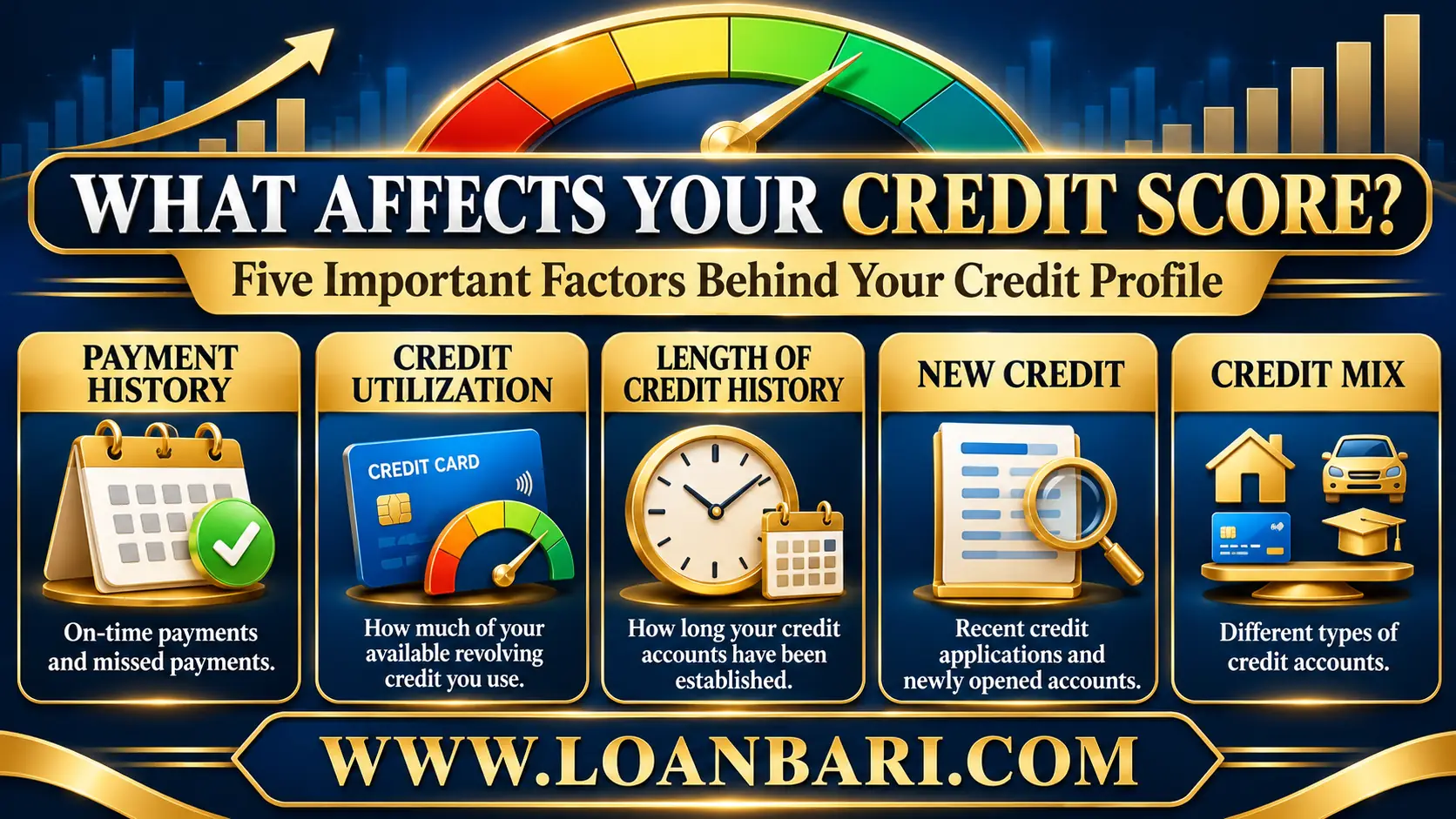
5. Can You Get a Personal Loan With Bad Credit?
It may be possible to get a personal loan with bad credit, but your options can be more limited. Some lenders consider applicants with lower scores or past credit problems, while others have minimum credit standards that may prevent approval.
If you receive an offer, pay close attention to its cost. A high interest rate, origination fee, or short repayment period can make a loan expensive. Before accepting, calculate whether the payment fits your budget and compare the total amount you would repay.
What lenders may consider when your score is low
A lender that reviews applications from borrowers with poor credit may look closely at other parts of the application, including:
- Current income and whether it can be verified.
- Monthly debt payments and available income after those payments.
- Recent payment history and the age of negative credit information.
- The amount requested and the proposed repayment period.
- Whether the applicant has a co-borrower or collateral, if the product permits it.
These factors do not guarantee approval. Each lender applies its own criteria, and a borrower should not assume that providing collateral or adding another applicant will overcome every credit concern.
Secured and unsecured personal loans
An unsecured personal loan generally does not require the borrower to pledge a specific asset as collateral. A secured personal loan is backed by collateral, such as an eligible savings account or another asset accepted by the lender.
Secured borrowing may be an option for some applicants, but it carries additional risk. If you fail to repay a secured loan, the lender may have the right to take the pledged asset, subject to the loan agreement and applicable law.
Understand the differences before applying by reading our guide to secured and unsecured personal loans.
Be careful with high-cost loan offers
Borrowers with limited options may encounter offers with high APRs, substantial fees, or aggressive sales claims. Be cautious of anyone who guarantees approval, demands an upfront payment to release a loan, or pressures you to sign before reviewing the agreement.
Never share sensitive personal or banking information with an unverified lender. Confirm the lender’s identity, review its terms, and understand the total cost before proceeding.
6. Personal Loan Credit Score Examples
The examples below show how different credit profiles may affect a personal loan application. They are hypothetical illustrations, not predictions of approval or actual lender offers.
Example 1: Applicant with a poor credit score
Imagine an applicant with a FICO Score of 550, several late payments, and a high credit card balance. Some lenders may consider this profile higher risk. The applicant may have fewer available offers, may be declined by lenders with stricter requirements, or may receive an offer with a higher APR.
Before applying, this borrower could review the credit report for errors, bring overdue accounts current where possible, and evaluate whether the requested loan is necessary and affordable.
Example 2: Applicant with a fair credit score
Consider an applicant with a score of 640, steady income, and manageable monthly debt. A lender that considers fair-credit applicants may review the application, but approval and pricing will depend on its underwriting standards and the rest of the credit file.
The applicant should compare the APR, fees, monthly payment, and total repayment amount across available offers.
Example 3: Applicant with a good credit score
An applicant with a score of 710, consistent payment history, and sufficient income may have access to a broader range of loan offers than someone with a weaker credit profile. Still, a high debt burden or a loan amount that exceeds the lender’s limits could affect the outcome.
Example 4: Applicant with an excellent credit score
An applicant with a score of 820 may have a strong credit profile under common FICO categories. That score may help the applicant qualify for competitive offers, but it does not guarantee approval or a particular APR. Income, debt, loan amount, and lender requirements continue to matter.
Key takeaway: A credit score is useful, but it does not tell the whole story. A lender evaluates the complete application.
7. How to Improve Your Credit Score Before Applying
If your credit score is lower than you would like, taking time to review and strengthen your credit profile may help. Credit scores are calculated using information in your credit reports, and changes do not necessarily appear immediately.
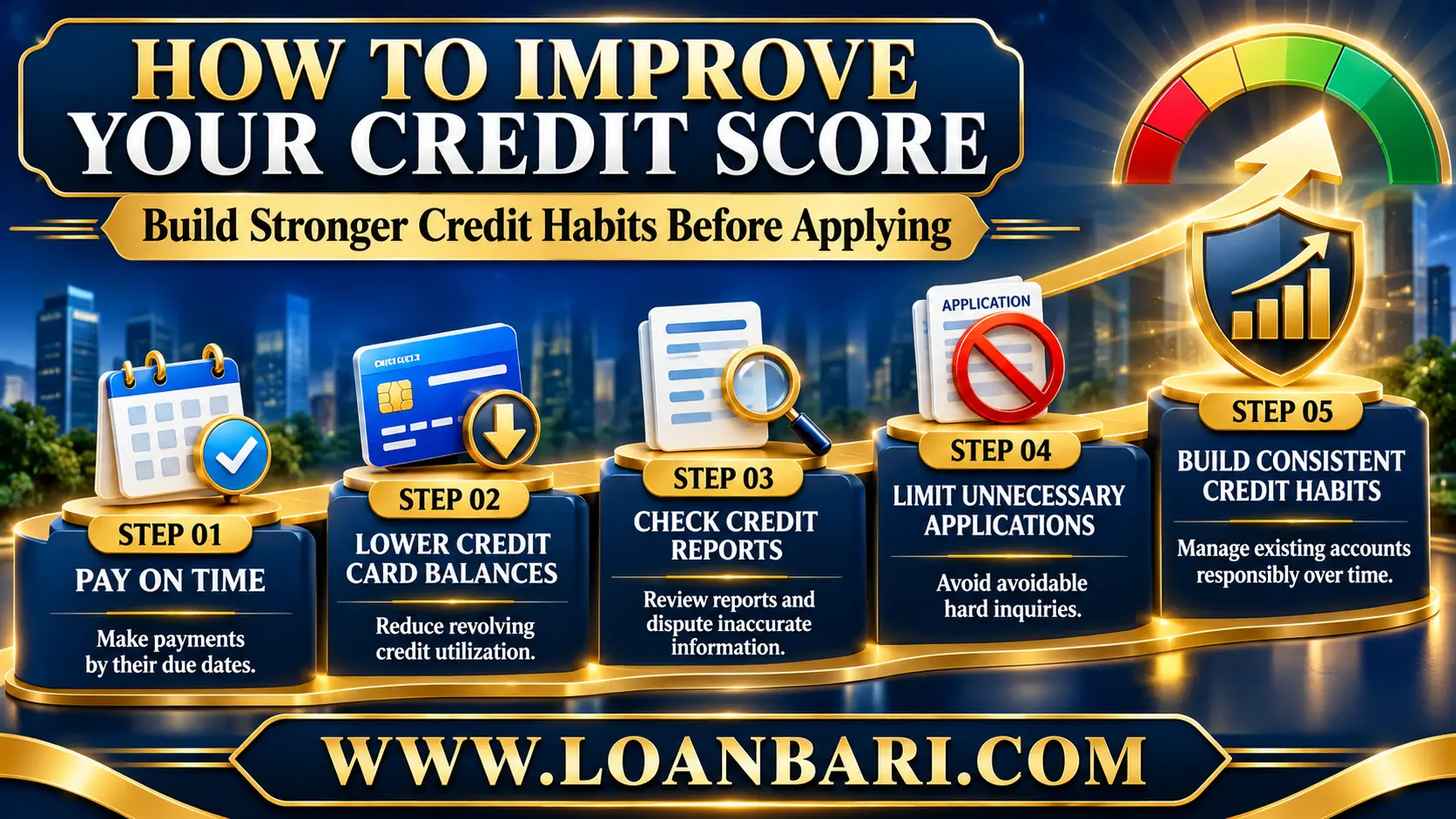
1. Pay bills on time
Payment history is an important factor in common FICO scoring models. Make at least the required payment by its due date. Consider setting up reminders or automatic payments for the minimum amount if that helps you avoid missed payments.
If you have already missed a payment, bring the account current if you can and contact the creditor to understand your options. Do not assume that a late payment will disappear immediately after you pay it.
2. Reduce credit card balances
Credit utilization compares the balances on revolving credit accounts with their available credit limits. High utilization may negatively affect some credit scores. Paying down balances can reduce the amount of available credit you are using, although the effect and timing vary.
For example, if a credit card has a $5,000 limit and a $2,500 balance, the utilization on that card is 50%. Reducing the balance may lower the utilization ratio when the updated balance is reported.
3. Check your credit reports for errors
Review your reports from Equifax, Experian, and TransUnion. Look for accounts you do not recognize, incorrect balances, inaccurate late-payment records, or information that belongs to someone else.
If you find an error, follow the credit reporting company’s dispute process and provide relevant supporting documents. Keep copies of your dispute and any responses. Correcting inaccurate information may help ensure that your credit file reflects your actual history.
4. Avoid unnecessary credit applications
Applying for several credit accounts within a short period can result in multiple hard inquiries. Hard inquiries may affect some credit scores. Before submitting an application, check whether the lender provides a prequalification option that uses a soft inquiry.
5. Keep older accounts in good standing
The length of your credit history can contribute to a FICO Score. Closing an older credit card may affect your available credit and other parts of your credit profile. Consider the account’s fees, security, and your ability to manage it responsibly before deciding whether to close it.
6. Be cautious about opening new accounts just to improve your score
Opening a new credit account solely to change your credit mix may not be worthwhile. A new account can create a hard inquiry and add another payment obligation. Only apply for credit when you have a genuine need and can manage the repayment responsibly.
7. Give credit report updates time
Creditors generally report account information periodically, not necessarily every day. After paying down a balance or correcting an error, it may take time for the updated information to appear on your reports and affect a score.
There is no guaranteed number of days or points by which a credit score will improve. Focus on accurate reporting and sustainable financial habits rather than quick-fix promises.
8. How to Check Your Credit Report and Score
Before applying for a personal loan, review your credit reports so you understand what lenders may see. In the United States, the three nationwide credit reporting companies are Equifax, Experian, and TransUnion.
Check your credit reports
You can request free credit reports from the three nationwide credit reporting companies through the federally authorized AnnualCreditReport.com service. The companies currently make reports available online weekly. Checking your own credit report through this service does not create a hard inquiry that lowers your credit score.
Review each report separately because the information held by the three companies may not be identical. Check your personal details, account history, balances, payment records, and any collection accounts.
Check your credit score
A credit report and a credit score are not the same thing. Your report contains information about your credit accounts and payment history. A score is calculated from information in a report using a particular scoring model.
You may be able to access a score through a bank, credit card issuer, credit monitoring service, or another provider. Ask which scoring model and version are being shown. A score you see through one service may differ from the score a lender obtains.
What to do if you find incorrect information
If an account, payment, balance, or personal detail is inaccurate, contact the relevant credit reporting company and the company that supplied the information. Follow their dispute instructions and provide evidence where available.
Do not pay a company that promises to remove accurate negative information from your credit report. Accurate information generally cannot be removed simply because it is unfavorable.
9. Does Applying for a Personal Loan Hurt Your Credit?
Applying for a personal loan can affect your credit score, depending on how the lender checks your credit and whether you proceed with a formal application.
Hard inquiries
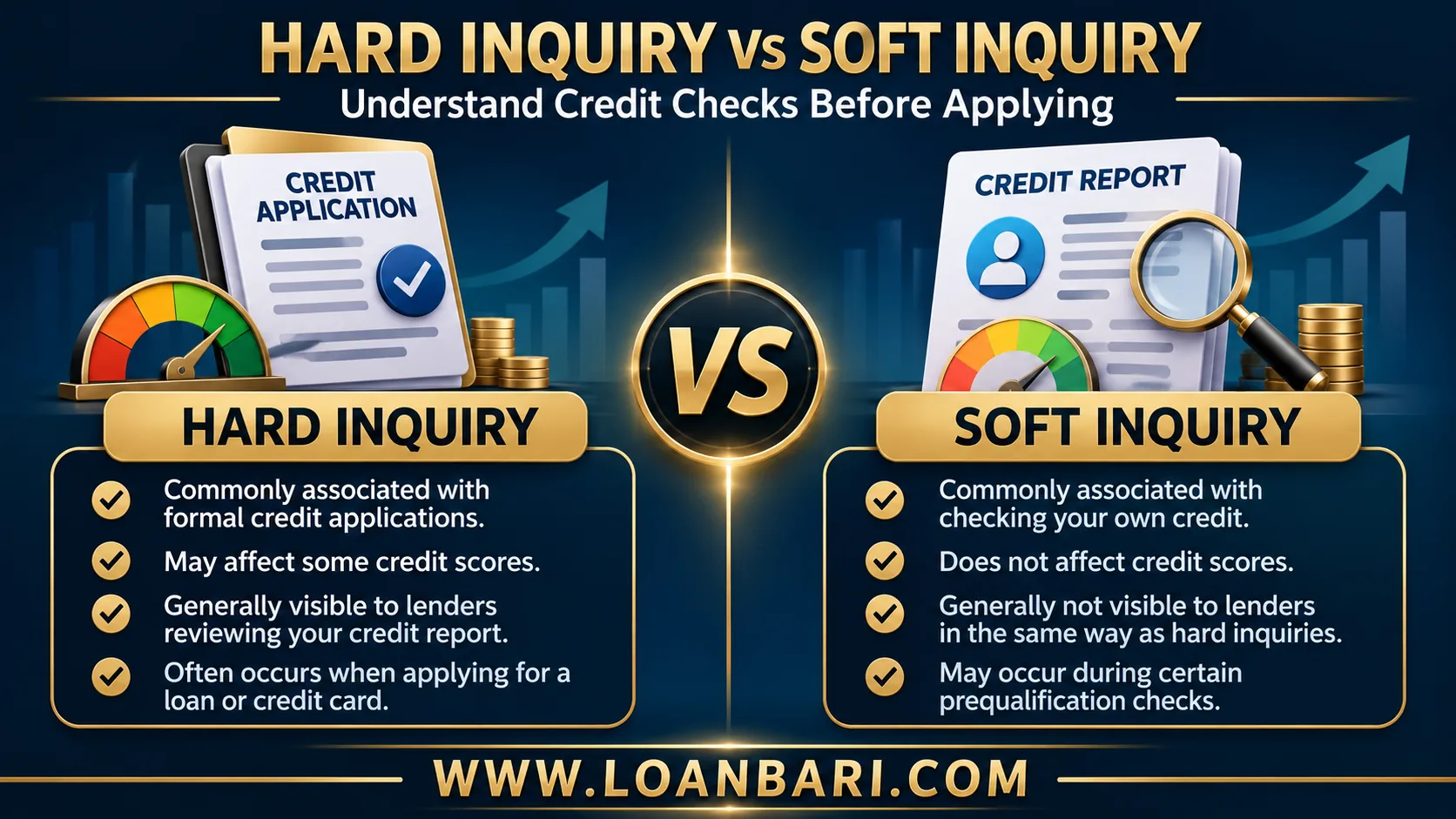
A hard inquiry generally occurs when a lender checks your credit report as part of a credit application. Hard inquiries can affect some credit scores and may appear on credit reports that lenders review.
A single hard inquiry usually has a limited effect, but the exact impact depends on the person’s credit profile and the scoring model. Several applications in a short period may be viewed differently from one carefully chosen application.
Soft inquiries
A soft inquiry may occur when you check your own credit, when a company performs certain account reviews, or when a lender offers a prequalification check. Soft inquiries do not affect credit scores.
However, not every prequalification process is identical. Confirm with the lender whether checking your potential offer requires a soft inquiry and whether submitting a full application will result in a hard inquiry.
| Feature | Hard Inquiry | Soft Inquiry |
|---|---|---|
| Common purpose | Formal credit application or lending decision | Personal credit check, account review, or certain prequalification checks |
| Can affect credit scores? | May affect some credit scores | No |
| Visible to lenders reviewing your report? | Generally yes | Generally not visible to lenders in the same way |
| Should you check first? | Understand when the lender will request it | Confirm the lender’s prequalification process |
How to reduce unnecessary hard inquiries
- Research lenders and eligibility requirements before applying.
- Use a soft-inquiry prequalification process when available.
- Avoid submitting applications to many lenders without comparing their terms first.
- Ask the lender when it will perform a hard credit check.
- Submit a formal application only after reviewing the likely costs and requirements.
For a step-by-step overview of the application process, read how to apply for a personal loan.
10. Credit Score Mistakes to Avoid Before Applying
Some actions can make it harder to understand your credit position or may create avoidable problems while preparing for a loan.
Assuming every lender uses the same score
Different lenders may use different scoring models and score versions. Your score from a free monitoring service may not be identical to the score used in a lender’s decision.
Applying without reviewing your credit report
Errors, unfamiliar accounts, and outdated information can go unnoticed if you never review your reports. Checking them before applying gives you an opportunity to identify and dispute inaccurate information.
Focusing only on the score
A credit score is important, but lenders may also review income, debt, employment, and the requested loan amount. Prepare your financial information rather than relying on a score alone.
Ignoring the APR and fees
A loan with an attractive advertised interest rate may still have fees or conditions that affect its total cost. Compare APR, origination fees, monthly payments, and total repayment amount before accepting an offer.
Taking a larger loan than necessary
Borrowing more than you need can increase your monthly obligation and total interest cost. Choose an amount based on your actual expense and your ability to repay it.
Believing guaranteed approval claims
No legitimate lender can guarantee that every applicant will be approved regardless of their financial circumstances. Be cautious of advertisements that promise approval without reviewing your application or ask for upfront payments to guarantee a loan.
11. Alternatives if Your Credit Score Is Too Low
If you are unable to qualify for a personal loan at an affordable cost, consider whether another approach may better fit your situation.
Wait and strengthen your credit profile
If the expense is not urgent, you may choose to spend time reviewing your credit reports, paying bills on time, reducing revolving balances, and addressing errors. These steps do not guarantee a particular score increase, but they can help build a stronger credit history over time.
Consider a smaller loan amount
A smaller amount may result in a more manageable monthly payment. Whether it improves your approval chances depends on the lender’s criteria and your financial circumstances.
Ask about a qualified co-applicant
Some lenders allow joint applications or co-borrowers. A second applicant’s financial profile may be considered, but both borrowers should understand their legal responsibility for repayment. Missed payments can affect the credit records of the people responsible for the debt.
Explore a credit union or community financial institution
Some credit unions and community-based financial institutions offer products designed for members with different credit backgrounds. Eligibility, membership rules, rates, and fees vary. Compare the complete terms rather than assuming these products will always be cheaper.
Review non-loan options
Depending on the expense, you may be able to negotiate a payment plan with a service provider, ask about financial assistance, adjust your budget, or delay a nonessential purchase. Avoid replacing one unaffordable debt with another expensive borrowing arrangement.
12. How to Prepare Before Applying for a Personal Loan
Taking a few practical steps before submitting an application can help you understand your financial position and compare offers more effectively.
- Review all three credit reports: Check your account information and look for errors or unfamiliar activity.
- Know which score you are viewing: Identify the scoring model and version, if the provider tells you.
- Calculate your monthly debt obligations: Include existing loan payments, credit card minimums, and other recurring debt payments.
- Estimate an affordable payment: Consider essential living expenses, savings needs, and income changes.
- Choose a realistic loan amount: Borrow only what you need and can reasonably repay.
- Compare APR and fees: Review the total cost, not just the advertised interest rate.
- Check prequalification terms: Ask whether the initial check uses a soft inquiry.
- Read the loan agreement: Understand payment dates, late fees, repayment terms, and any collateral or co-borrower obligations.
Being prepared does not guarantee approval, but it can help you avoid rushed decisions and understand the commitment before borrowing.
13. Frequently Asked Questions About Personal Loan Credit Score Requirements
What credit score do you need for a personal loan?
There is no single score required by every personal loan lender. Each lender sets its own standards and may consider your credit history, income, debt, and other application details. A higher score may improve your options, but it does not guarantee approval.
Can I get a personal loan with a 500 credit score?
It may be difficult to qualify with a 500 score because many lenders prefer stronger credit profiles. Some lenders may consider lower-score applicants, but approval, loan amount, APR, and fees depend on their individual requirements and your overall financial situation.
Is a 600 credit score good enough for a personal loan?
A 600 score falls within the commonly used FICO fair range. Some lenders may consider an applicant in this range, while others may have higher minimum standards. Income, debt, payment history, and other factors can influence the decision.
Can I get a personal loan with a 650 credit score?
A 650 score is generally within the fair FICO range. Some lenders may review applications at this level, but the score alone does not determine approval. Compare lenders carefully and review the APR and fees before accepting an offer.
Is a 700 credit score good for a personal loan?
A 700 score falls within the commonly used good FICO range. It may help you qualify for a wider selection of offers than a lower score, but lenders still consider income, debt, credit history, loan amount, and their own underwriting rules.
What is the easiest personal loan to get approved for?
There is no personal loan that is easiest for every borrower. Eligibility depends on the lender’s requirements and your financial profile. Compare products that match your circumstances, and avoid choosing a loan only because its approval requirements appear less strict.
Do personal loan lenders check all three credit bureaus?
Not necessarily. A lender may obtain a credit report from one or more of the nationwide credit reporting companies. The process varies by lender and product. You can review reports from Equifax, Experian, and TransUnion before applying.
Does checking my own credit score lower it?
No. Checking your own credit score or requesting your own credit report is generally treated as a soft inquiry and does not lower your credit score.
How many points does a personal loan application take off your credit score?
There is no fixed number of points for every applicant. A formal application may create a hard inquiry, which can affect some credit scores. The impact depends on your credit profile and the scoring model used.
How long do hard inquiries stay on a credit report?
Hard inquiries can generally remain on a credit report for up to two years. Their effect on a credit score may be different from how long they remain visible, and the impact can vary by scoring model.
Can I get a personal loan without a credit history?
Some lenders may consider applicants with limited or no established credit history, but options can be restricted. A lender may review income, employment, banking information, or other permitted factors. Check the lender’s requirements before applying.
Will paying off credit cards improve my chances of getting a personal loan?
Reducing credit card balances may lower your credit utilization, which can help some credit scores. It may also reduce your monthly debt obligations. However, the timing and effect vary, and paying off balances does not guarantee personal loan approval.
Does a personal loan improve your credit score?
A personal loan may affect your credit in different ways. Making on-time payments can contribute to a positive payment history, while a new account and hard inquiry may have short-term effects. Taking a loan solely to improve your score is not recommended if you do not need the borrowing or cannot comfortably repay it.
Can I get a personal loan after a late payment?
Possibly. A late payment may affect your credit profile, but lenders differ in how they evaluate its severity, recency, and context. Your other credit history, income, and debt obligations may also influence the decision.
Should I apply for a personal loan before improving my credit score?
If the expense is not urgent, reviewing your credit reports and addressing issues before applying may be helpful. If you need funds immediately, compare available offers carefully and make sure the repayment is affordable. Avoid submitting multiple applications without understanding the potential credit checks.
14. Final Thoughts
Personal loan credit score requirements vary from one lender to another. A higher credit score may improve your borrowing options and help you qualify for more competitive terms, but it is only one part of the application process. Income, existing debt, payment history, loan amount, and lender-specific requirements can all influence the final decision.
Before applying, review your credit reports, understand the score you are checking, compare APRs and fees, and calculate a monthly payment that fits your budget. If your credit profile needs work, focus on accurate reporting and responsible financial habits rather than quick-fix promises.
The best personal loan is not simply the one you can qualify for. It is one with terms you understand and payments you can realistically manage.